The Challenge of Pain
Pain is much more than a physical sensation. It can work it’s way into all aspects of our life, affecting our physcial health, our mental health, our ability to work, play and our relationships with friends and family.
Everyone’s pain is unique to them and the impact that pain has on their life is also very personal. The quotes and videos below will help you to understand how common pain is in Ireland, that you are not alone and will introduce you to some of the common area’s of your life that pain might effect.
What people living in Ireland are saying about their experiences with pain.

“In general, I've kind of been in a world, a fog, I just didn't know where to go, what to do, who to believe”
— Jane 61, living with Chronic Low Back Pain

“you don't realize how far down that rabbit hole you're going”
— Emma 63, living with Rheumatoid Arthritis

“For the consultants to tell you there's nothing wrong with you,to not be validated that was tough. Those 6 years were really tough”
— Adam 55, living with Ankylosing Spondylitis
“it's the unknown unknowns, you can't advocate for yourself in an area that you just don't know.”
— Shane 41, living with Neuropathic Pain
Stigma and Pain
Chronic pain is often called an invisible illness, and many people living with pain experience stigma. Being stigmatised means being unfairly judged or negatively labelled, which can lead to discrimination and exclusion. This is especially common for conditions that lack clear medical explanations and which are often misunderstood by others.
👉 Watch the video below to learn more about stigma and its impact on people living with pain.
Types of Chronic Pain
Chronic primary pain is pain that persists for more than three months that is not fully explained by an underlying disease or injury. This type of pain is often associated with significant emotional distress and challenges with daily activities.Examples include fibromyalgia and complex regional pain syndrome.
Chronic secondary pain is pain that persists for over three months and is directly attributed to an underlying condition, such as osteoarthritis, rheumatoid arthritis, or endometriosis. Managing chronic secondary pain involves addressing both the pain symptoms and the medical condition causing the pain.
Both primary and secondary pain can benefit from a combination of self-management strategies.
👉 Watch the video to learn more about different types of pain and how they affect your body.
Pain Flares
Pain Flares are a significant challenge when living with chronic pain. A pain flare is a temporary increase of chronic pain that often impacts daily activities and emotions. They often happen with no obvious cause and can be distressing. These episodes can last from hours or days. Having a pain flare toolkit may help guide you through a flare when it happens.
👉 Watch the video to learn more about different types of pain and how they affect your body.
What is Chronic Pain?
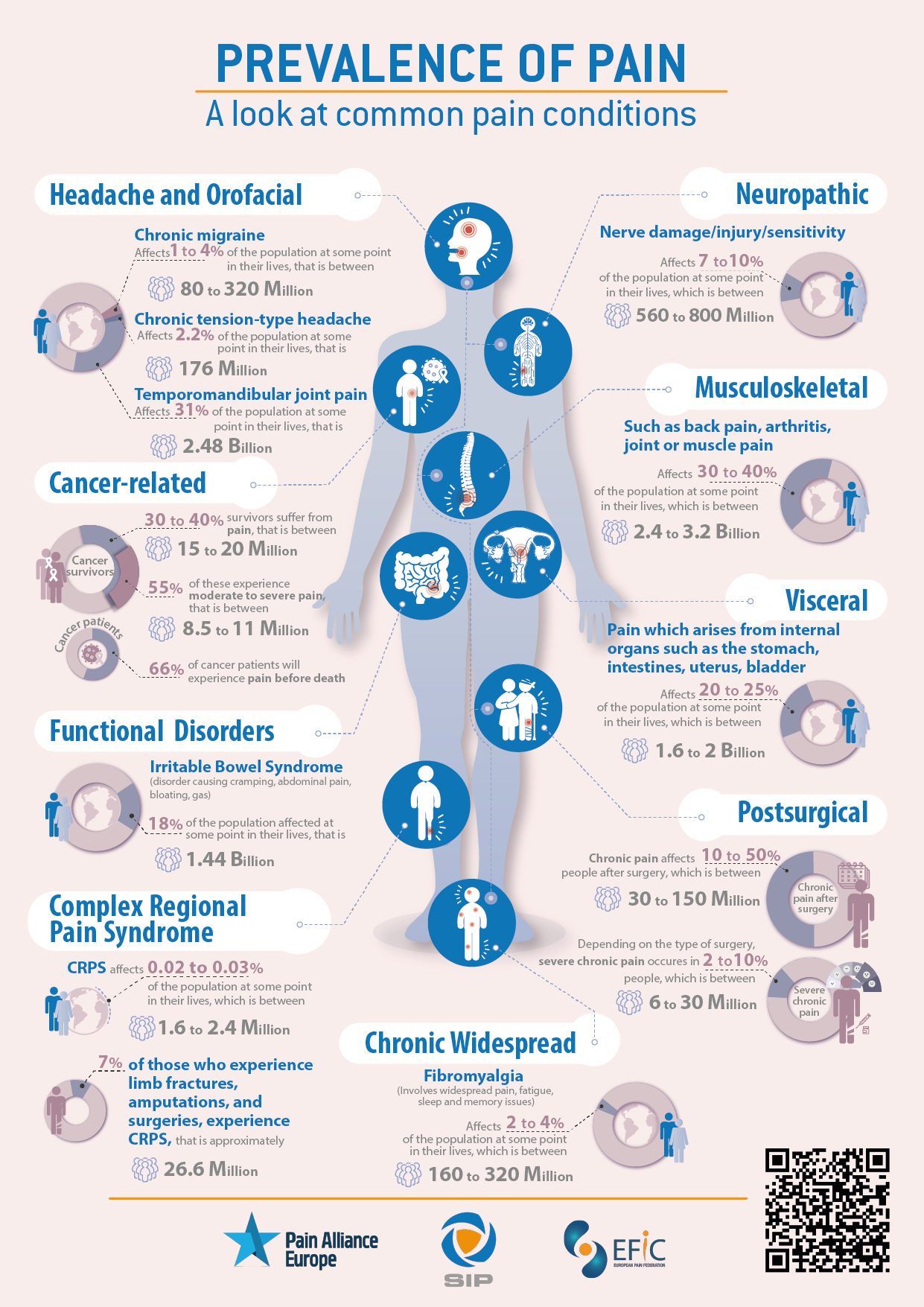
You Are Not Alone: The Widespread Reality of Chronic Pain
Prevalence of pain refers to how many people experience pain within a certain group or population. Chronic pain affects a large number of people worldwide, which means you’re not alone in your experience. Understanding how common pain is can help reduce feelings of isolation and encourage support.
Take some time to explore the poster below, created by key organizations, Pain Alliance Europe, EFIC, and SIP, showing how many people live with chronic pain worldwide.